
Home / php
Server-Side Web Development with PHP
Versai Academy's PHP Programming course is designed for learners who aspire to build dynamic, database-driven websites using PHP, one of the most popular server-side scripting languages powering over 75% of all websites. PHP is a versatile language that enables developers to create everything from simple blogs to complex e-commerce platforms and content management systems. This course covers PHP from fundamentals to advanced concepts, including working with databases, form handling, sessions, cookies, and object-oriented programming. The course begins with PHP syntax and basic programming constructs, then progresses to more advanced topics like MySQL database integration, security best practices, and working with popular PHP frameworks. Students will learn how PHP interacts with HTML, CSS, and JavaScript to create complete web applications. With a strong emphasis on practical, hands-on learning, participants will build real-world projects that demonstrate their ability to create secure, efficient, and scalable web applications. By the end of the course, students will be equipped with the skills needed to develop professional-grade web applications using PHP.
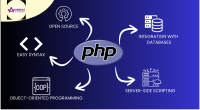
Under Versai Academy's PHP Programming course, you will learn the following key skills:
PHP Fundamentals: Master PHP syntax, variables, data types, operators, and control structures to build the foundation for server-side scripting.
Form Handling: Learn to process HTML forms with PHP, validate user input, and implement security measures against common vulnerabilities.
Working with Databases: Connect PHP applications to MySQL databases, perform CRUD operations, and write secure SQL queries.
Session Management: Implement user authentication systems, manage sessions and cookies to create personalized user experiences.
Object-Oriented PHP: Understand OOP concepts in PHP including classes, objects, inheritance, and polymorphism for building modular applications.
File Handling: Read from and write to files on the server, manage file uploads, and work with directories.
Error Handling: Implement proper error handling and debugging techniques to create robust applications.
Security Best Practices: Protect applications against SQL injection, XSS, CSRF, and other common web vulnerabilities.
Working with APIs: Consume RESTful APIs and create simple APIs for your applications.
PHP Frameworks: Get introduced to popular PHP frameworks like Laravel or CodeIgniter for rapid application development.
Deployment: Learn how to deploy PHP applications to web servers and configure them for production environments.